How to Measure for Apex Curtains
Apex curtains can transform a difficult window into one of the strongest features in a room, but the measuring stage matters enormously. If the measurements are wrong, even beautiful fabric and a well-made track can never look quite right.
Unlike standard straight windows, apex windows often involve height, angles and unusual proportions. That means the measuring process needs more care. The aim is not just to cover the glass, but to create a curtain scheme that feels balanced, elegant and intentional.
Why apex curtain measuring is different
With a normal window, people often measure the width and drop and assume that is enough. Apex windows are different because the architecture itself affects how the curtains should sit.
The top line may be angled. The window may rise into a point. The wall area around the glass may matter just as much as the glass itself. In many cases, the curtain scheme should frame the broader area, not cling tightly to the visible window opening.
This is why measuring apex curtains is not only about dimensions. It is about deciding what the curtain system is trying to achieve in the room.
Step 1: Decide what area the curtains should cover
Before taking exact measurements, step back and look at the whole elevation.
Ask yourself:
Do you want the curtains to sit tight to the window shape?
Or do you want them to frame the wider wall area and soften the whole feature?
In many apex rooms, the second option creates the stronger result. Curtains often look more luxurious when they extend beyond the glass rather than stopping abruptly at the edges.
For this reason, the first measurement should be the total intended curtain span, not just the visible glazing width.
Step 2: Measure the overall width
Measure the full width across the area you want the curtains to cover.
This may be:
the width of the glazing itself
the width between two wall returns
or a wider framed area if the curtain design extends beyond the glass
Always record the width carefully and note whether the measurement is taken from wall to wall, from one fixing point to another, or across the glass only.
This matters because made-to-measure curtain systems are designed around the actual installation width, not assumptions.
Step 3: Identify the highest point of the apex
Now identify the highest point of the feature.
In an apex window this is often the central peak. In other unusual windows it may be the highest practical fixing point.
Measure from this top point down to the floor, or to the intended curtain finish level if the curtains are not floor length.
This gives you your maximum drop.
For tall feature windows, full-height curtains usually create the most elegant and intentional finish, so many apex schemes run all the way to the floor.
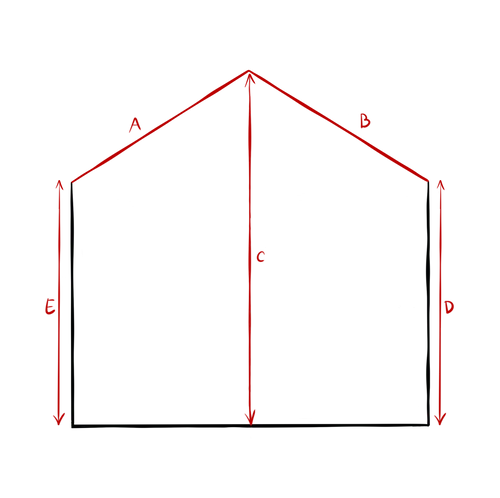
Step 4: Measure the side drops as well
This is the part many people miss.
Because the top line is angled, the side drops may not match the central height. Measuring only the centre can leave major gaps in understanding the shape.
Take separate drop measurements at key points, including:
the centre apex point
the left side
the right side
and any additional important positions if the shape is especially unusual
These measurements help define the geometry of the window and guide how the final curtain system should be planned.
Step 5: Think about the track position
Apex curtains are not just about fabric. The track position plays a major role in how the finished scheme looks.
Before finalising measurements, consider:
Will the curtain track sit directly above the glass?
Will it be fixed higher to create more drama?
Will it follow the line of the architecture, or frame the broader wall area?
A curtain track fixed in the wrong place can make the whole window feel awkward, even if the curtain measurements themselves are technically correct.
This is why track planning and measuring should always be considered together.
Step 6: Consider stack back
Curtains need somewhere to sit when open.
For apex and feature windows, this is especially important because a poor stack back decision can block light or make the window feel crowded.
Think about:
how much space the curtains will need at each side
whether the room has enough wall area for stacking
whether the track design allows the curtains to draw back neatly
A measuring plan that ignores stack back can lead to a curtain scheme that works on paper but feels wrong in the actual room.
Step 7: Check the room, not just the window
The best apex curtain schemes are designed for the room as a whole.
That means looking beyond the glazing and considering:
ceiling height
wall returns
radiators
furniture placement
how formal or relaxed the room should feel
Apex curtains should support the architecture and improve the room visually. Measuring only the glass can miss the bigger design opportunity.
Common measuring mistakes with apex curtains
One of the biggest mistakes is measuring only the visible glass.
Another is assuming the curtain track will automatically sit in the most obvious place.
A third is forgetting that apex curtains are often part design feature, part practical solution. They need to look right both closed and open.
People also often underestimate how much difference a few extra centimetres can make to balance, stack back and final proportion.
Should you measure yourself or get help?
For some people, taking basic measurements is a useful starting point. It helps begin the conversation and gives a general sense of scale.
But for many apex, triangular and feature windows, professional guidance produces a better result. The complexity is rarely just about numbers. It is about how those numbers translate into a curtain scheme that actually works.
If the space is tall, angled or architecturally unusual, it is often best to get tailored advice before committing to a final specification.
Our recommendation
If you are measuring for apex curtains, start by understanding the full visual area you want the curtains to cover. Then measure width, highest drop and side drops carefully, while also thinking about track position and stack back.
The strongest apex curtain schemes are not rushed. They are planned around the room, the architecture and the way the curtains will actually behave once installed.
That is what separates a merely functional solution from one that makes the whole space feel complete.
Need help with your apex window?
If you are unsure how to measure your apex window, the best next step is to upload a photo and start your curtain journey. That makes it much easier to guide the right track position, proportions and overall curtain direction for your room.
You can also explore our apex curtains page for more specialist guidance on curtain solutions for angled, triangular and architectural windows.
Measuring
How to Measure for Apex Curtains
Learn how to measure for apex curtains properly, including width, drop and angled window considerations. Expert guide for triangular and feature windows.
Explore Solutions
Explore curtain solutions by window type
Related Guides
Continue reading
Need tailored advice?
Have a similar window in your home?
Start your curtain journey, upload a photo of your window and get advice tailored to your space.